
How to Create a Seamless Wedding Reception Timeline in Minneapolis

A wedding reception can feel effortless to guests while still being carefully planned behind the scenes. The music starts at the right moment, dinner moves without long gaps, speeches feel warm instead of drawn out, and there is enough room in the evening for real conversation.
That kind of flow does not happen by accident. In Minneapolis, timing also depends on the setting. A riverfront venue near the Stone Arch Bridge has different photo opportunities than a downtown hotel ballroom. A museum reception may have different room-flip needs than a brewery, garden, or industrial space in Northeast.
The goal is not to schedule every minute so tightly that the night feels stiff. The goal is to give the reception a clear shape, then leave enough space for the fun parts to breathe.

Start with the key moments your reception needs
A strong reception timeline begins with the major moments. Once those are in place, the smaller details become easier to arrange.
Most Minneapolis wedding receptions include some version of these elements:
Guest arrival and cocktail hour
Wedding party or couple entrance
Welcome toast or blessing
Dinner service
Speeches
Cake cutting or dessert service
First dance and parent or family dances
Open dancing
Late-night snack or coffee service
Last call and final song
Transportation or send-off
Not every reception needs all of these. A small dinner at a private room in the North Loop may skip formal entrances. A joyful dance-heavy wedding at an industrial venue may keep speeches short and open the dance floor early. A family-focused celebration may place more time around toasts, traditions, and shared desserts.
The best place to start is with a simple question:
What do guests need to experience, and what do we want to remember most?
If the answer is “we want a relaxed dinner where people can talk,” protect the dinner hour from too many interruptions. If the answer is “we want everyone dancing as soon as possible,” keep the formal events close together and move quickly into music.
A useful reception flow often looks like this:
Reception moment | Why it matters | Timing tip |
Cocktail hour | Gives guests time to arrive, mingle, and enjoy drinks while photos finish | Keep it close to 60 minutes when possible |
Entrance and welcome | Signals the shift from gathering to celebration | Place it before dinner or right after guests are seated |
Dinner | Sets the pace for the rest of the night | Give plated meals and buffet service different amounts of time |
Toasts | Adds meaning and personality | Keep them clustered so guests stay engaged |
Dances | Creates a natural emotional peak | Move from first dance into open dancing if the energy is high |
Late-night food | Revives the room and keeps guests comfortable | Serve it after guests have danced for a while |
One couple I worked with on a Minneapolis reception worried that their timeline looked “too simple.” They had cocktail hour, dinner, three short toasts, first dance, and open dancing. That was it. The result felt warm and unforced because there were no unnecessary pauses. Guests never wondered what was next, but no one felt managed either.
That is the sweet spot.
Give each activity enough space without letting the night drag
A reception timeline can go wrong in two opposite ways. It can feel rushed, with guests pulled from one moment to the next before they settle in. Or it can feel slow, with long gaps while people wait for dinner, speeches, or dancing.
The solution is to build in soft buffers. These are small pockets of time that protect the flow without making the schedule feel padded.
For example, if cocktail hour runs from 5:00 to 6:00 p.m., plan to invite guests to dinner around 5:50. That gives people time to finish drinks, find their tables, visit the restroom, and greet relatives. If doors open to dinner right at 6:00 and the grand entrance also happens at 6:00, the timeline will feel tight before dinner even starts.
The same idea applies throughout the evening.
Keep cocktail hour realistic
Cocktail hour often carries more weight than couples expect. During this time, the wedding party may be finishing portraits, the couple may be taking sunset photos, guests are checking coats, and vendors are preparing the reception room.
In Minneapolis, the season can affect this part of the day. Summer weddings may include outdoor patios, skyline views, or photos near the river. Winter weddings often need extra time for coats, boots, indoor portraits, and transportation from ceremony to reception.
A cocktail hour of about one hour usually works well. If the ceremony and reception are in the same building, it may be easier to stay close to that. If guests travel between locations, add travel time and a cushion.
Be careful with speeches
Toasts can be one of the most memorable parts of the night. They can also slow the reception if there are too many or if speakers do not know the plan.
A good rhythm is three to four speeches, each kept brief. Ask speakers ahead of time to aim for a few minutes. Place speeches during dinner when guests are seated, or group them just after dinner before dessert.
Avoid scattering speeches throughout the night unless there is a clear reason. Every time the room has to quiet down, the energy resets.
Let dinner service shape the middle of the reception
Dinner timing depends on service style. Plated meals often need coordination between the kitchen, servers, and speeches. Buffets need time for each table to be released. Family-style meals can feel communal, but they need table space and a little extra patience.
Ask the caterer or venue manager how long their service normally takes for your guest count. Their answer is more useful than a generic template.

Match the timeline to your Minneapolis venue
The venue has a major effect on timing. A seamless wedding reception timeline in Minneapolis should reflect the building, the neighborhood, the season, and the way guests move through the space.
Downtown hotels can make logistics easier
Downtown Minneapolis hotels work well when many guests are traveling. Rooms, elevators, valet or parking, catering, and reception spaces are often close together. This can shorten travel gaps and make it easier for guests to move from ceremony to cocktail hour to dinner.
The tradeoff is that elevators, room transitions, and shared spaces can still take time. If the cocktail hour is on one floor and dinner is on another, plan for guest movement. Older relatives, families with strollers, and guests in formal shoes will appreciate a relaxed pace.
Riverfront venues benefit from photo buffers
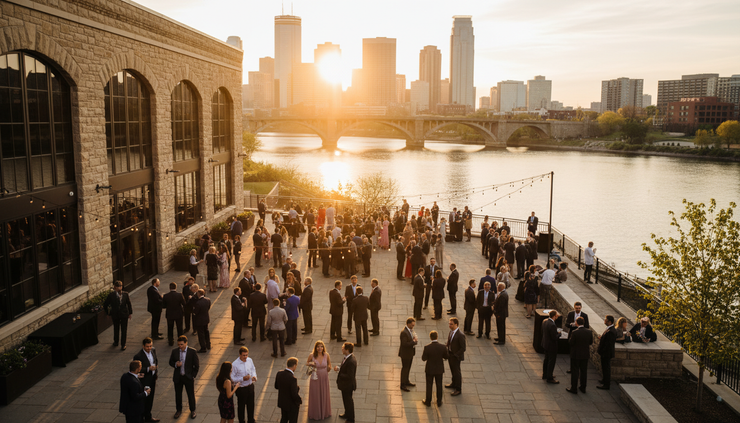
Venues near the Mississippi River, Nicollet Island, or the Stone Arch Bridge area often offer beautiful photo options. Those views can influence the timeline in the best way, as long as they are planned.
If sunset portraits matter, check sunset timing for your date and build the reception around it. In June, you may be able to step out later in the evening. In October, that window comes much earlier. A short portrait break after dinner can work, but tell the DJ, planner, and photographer so guests are not left waiting for the next event.
Museums and historic spaces may need room transition time
Museum and historic venues can create an unforgettable setting, but some have specific guidelines for catering, setup, sound, decor, or room changes. If the ceremony, cocktail hour, and reception happen in the same general area, the team may need time to reset the room.
That does not mean guests have to feel the pause. Cocktail hour can happen in a gallery-style space, lobby, courtyard, or adjacent room while the main reception area changes over. The key is confirming the transition time with the venue before finalizing your order of events.
Northeast industrial venues support a lively party flow
Many Northeast Minneapolis venues have open layouts, exposed brick, high ceilings, or flexible floor plans. These spaces can be excellent for receptions where dinner and dancing happen in the same room.
Sound and layout matter in these venues. If the bar is far from the dance floor, guests may drift away from dancing. If the photo booth sits near the entrance, it may pull people out of the main room. Build the timeline around where people will naturally gather.
Outdoor and garden settings need weather plans
Minneapolis weather can be generous, unpredictable, or both in the same week. If any part of the reception is outside, the timeline should include a rain or heat plan.
That plan should cover:
Where cocktail hour moves if it rains
How long it takes staff to move chairs, bars, or displays
Whether guests need transportation between indoor and outdoor areas
When heaters, fans, umbrellas, or tents come into play
How announcements will reach guests if they are spread out
A backup plan is not pessimistic. It helps everyone relax.
Coordinate with vendors and guests before the wedding day
A timeline only works if the right people have the right version of it. That sounds simple, but many wedding-day delays happen because one vendor has an old draft, a family member does not know where to be, or guests are unsure where to go after the ceremony.
Create one final reception timeline and share it with the core vendor team. This usually includes:
Venue manager
Caterer or banquet captain
Planner or day-of coordinator
Photographer and videographer
DJ or band
Florist
Transportation provider
Dessert vendor
Hair and makeup team, if touch-ups or schedule overlap matter
Send the final version about one to two weeks before the wedding, then confirm any last changes during the final venue or vendor check-ins.
The DJ or band needs exact cues for introductions, dances, speeches, and last song. The caterer needs to know when guests sit, when speeches happen, and when dessert starts. The photographer needs to know when formal events occur so no key moment is missed. Transportation needs realistic pickup times, especially if guests are moving through downtown traffic, a game-day crowd, construction, or winter weather.
Guest communication matters too. Guests do not need the full vendor timeline, but they do need clear basics.
Put these details on the wedding website, invitation insert, or welcome note:
Ceremony start time
Reception location
Parking or shuttle guidance
Cocktail hour start time
Dinner expectations, especially for long gaps
Dress guidance for outdoor photos or cold weather
Shuttle return times, if offered
For family and wedding party members, share a more specific call-time schedule. Tell them where to be, when to arrive, and who to contact if they are delayed. This prevents the couple from becoming the help desk on the wedding day.
One helpful tactic is to name a trusted point person for family questions. This might be a planner, coordinator, sibling, or friend who knows the schedule. That person can answer “Where do we line up?” or “When is our toast?” while the couple enjoys the reception.
Use a sample timeline as a guide, not a rule
A sample timeline can help you picture the evening, but it should never replace advice from your venue and vendors. Guest count, meal style, ceremony location, and season all change the timing.
Here is a sample reception timeline for a Minneapolis wedding where the ceremony and reception happen at the same venue:
Time | Event |
4:30 p.m. | Ceremony begins |
5:00 p.m. | Cocktail hour starts, family photos begin |
5:50 p.m. | Guests invited to find seats |
6:05 p.m. | Couple or wedding party entrance |
6:10 p.m. | Welcome toast |
6:15 p.m. | Dinner service begins |
7:10 p.m. | Toasts during or near the end of dinner |
7:35 p.m. | Cake cutting or dessert service |
7:50 p.m. | First dance and family dances |
8:05 p.m. | Open dancing begins |
9:30 p.m. | Late-night snack |
10:45 p.m. | Last call reminder or shuttle announcement |
11:00 p.m. | Final song |
This timeline works because it has clear movement. Guests are not seated too early. Dinner is not interrupted over and over. Dancing begins before the night feels late.
For a wedding at a separate ceremony site, the timeline may need a longer gap between ceremony and cocktail hour. For a winter wedding, transportation and coat check may need extra space. For a reception with multiple cultural traditions, add each one with care rather than squeezing it into a small opening.
A good test is to read the timeline out loud and imagine being a guest. Are there long periods with no food, drink, music, or direction? Are there moments where guests must move too quickly? Does the couple have time to eat, greet people, and step away for a quiet minute?
If the answer feels off, adjust the pace.

Leave room for the moments no timeline can predict
The best receptions have a plan, but they do not feel controlled. They leave space for a grandparent to linger over a hug, friends to cheer after a toast, or the couple to step outside for five quiet minutes under the city lights.
Build the timeline around what matters most. Ask vendors how long their work truly takes. Let the venue shape the flow. Keep speeches focused, dinner comfortable, and transitions clear. Then give the night enough breathing room to become its own memory.
A seamless reception is not the one with the most events. It is the one where every part feels easy to follow, personal, and well cared for from the first toast to the final song.


Comments